Original · source table
Hangulish
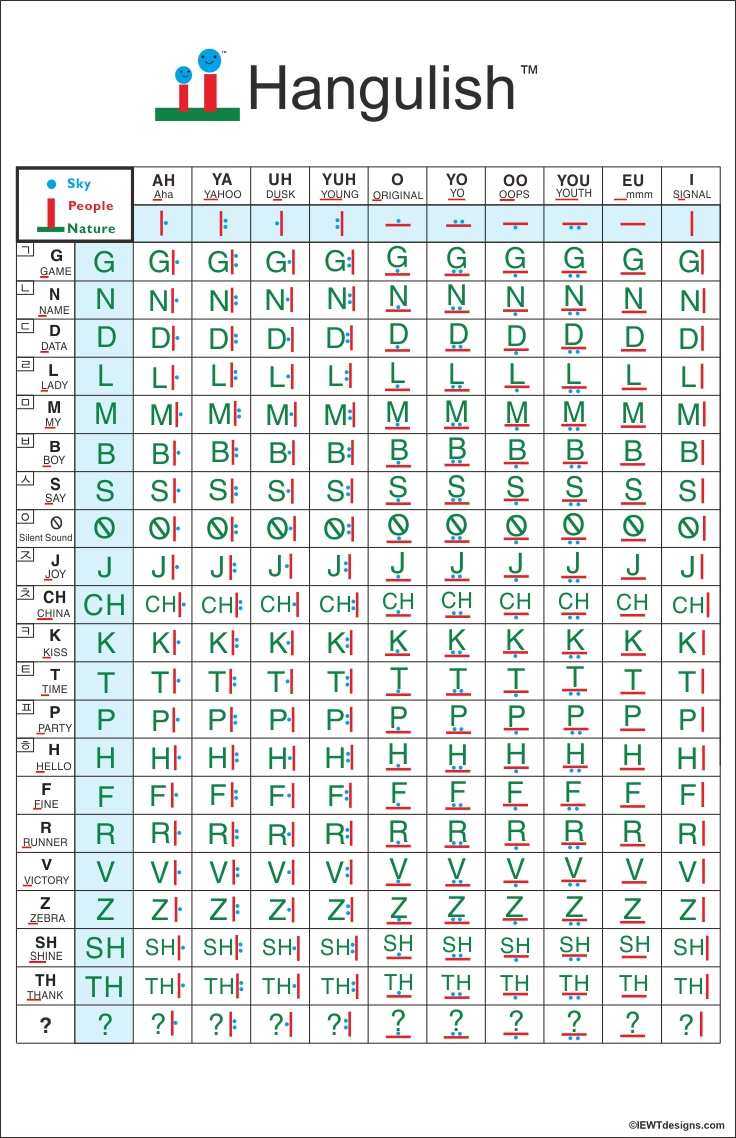
The original table pairing Latin consonants with Hangul vowels.
Open the source view ↗The lab keeps the original tables, the experiments, and the fonts in one place. Hangulish and Hangul 2.0 are design studies we are building in the open, and we label what is original, what is restored, and what is still a concept.
Pronunciations are suggested readings, not official or legal names. Hangul 2.0 is a concept, not a finished standard.
The original table pairing Latin consonants with Hangul vowels.
Open the source view ↗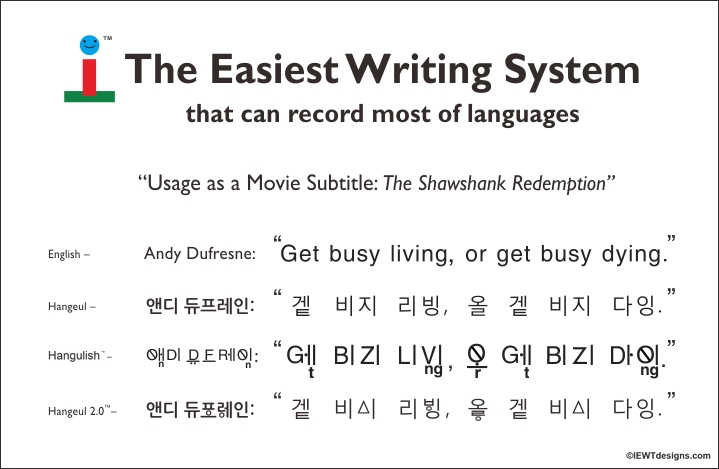
A comparison of English, Hangul, Hangulish, and Hangul 2.0.
Open the source view ↗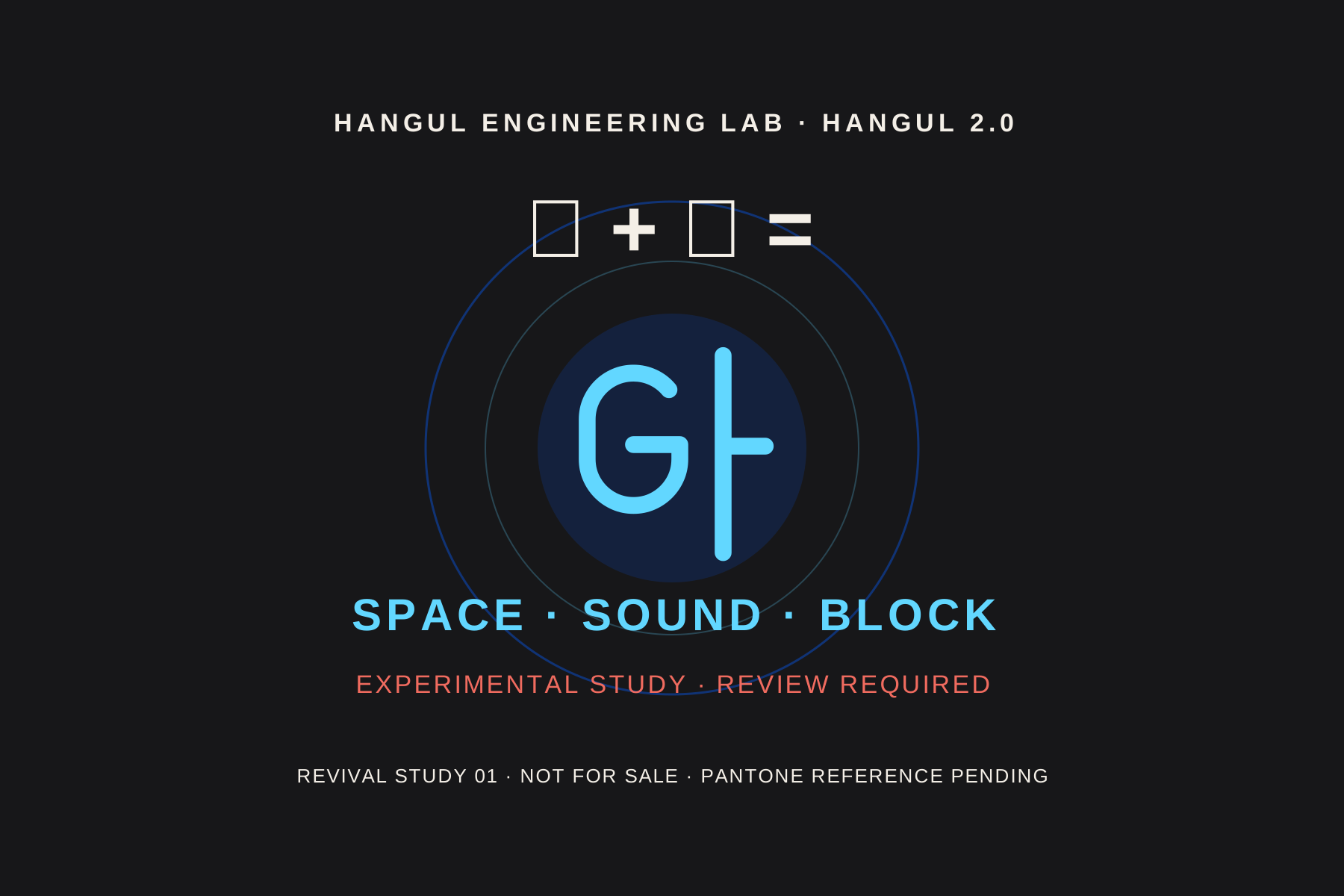
Hangulish and Hangul 2.0 are a design study that continues what others began. Credits are acknowledgements, not licences.
Everything starts with the alphabet made so that ordinary people could write. We carry that spirit, 홍익인간, to benefit people widely, into a new door for the world's names.
The original Hangulish and Hangul 2.0 tables on this site come from the IEWT Design archive. See the source tables
The Pen, Brush and Soft pen styles are built from the letters of Nanum Pen, Nanum Brush and Nanum Barunpen (© NHN Corporation / NAVER; designed by Sandoll Communications and YoonDesign). We scaled and recomposed them into Hangul syllable blocks, and renamed the result. It is used under the NAVER Nanum font license: modification and commercial use are allowed, and the font file is never sold on its own. Font licences
The Clean, Light, Bold, Marker, Round and Buri styles use our own outlines. Its block sizes were measured from Pretendard (SIL Open Font License 1.1, © 2021 Kil Hyung-jin); no Pretendard outlines are included.
We also read the annotated Hunminjeongeum through NAVER's full-text edition, which helped us check the original text.
The lab keeps the tables, the experiments and the fonts together, and labels what is original, what is restored, and what is still a concept.